With us, go-live is no goodbye.
We keep running your system: interfaces, monitoring, parameters, metrics. A fixed point of contact with full ownership, plus our infrastructure. Everything nobody internally wants to do.
inventory under management. This capital depends on our systems running every night.
That's why operation isn't a support add-on for us, but its own module: our own infrastructure, fixed responsibilities and a rhythm that holds the effect.
Lead times, lot sizes and demand change constantly. Rules nobody updates steer past the market after two years.
The key user changes, and with them the logic behind the settings disappears. After that nobody dares touch anything.
An ERP update changes a field, the nightly run fails, and someone only notices once the order proposals are missing.
What does that mean concretely for your company?
If several of these points apply to you, your system is quietly losing its effect right now.
After the project, Excel returns.
Six months after go-live, the team is working around the software again.
Parameters date from the rollout year.
Demand and lead times have changed, the rules haven't.
Interface errors only surface in the warehouse.
The nightly run failed silently; in the morning the order proposals are missing.
Nobody looks at the metrics.
Service level and stock value exist, but nobody is responsible for them.
Every request becomes a ticket.
The vendor doesn't know your system, the service provider has no time, internally there's no capacity.
The optimisation fizzles out after the first success.
Inventory drops for a year, then grows back unnoticed.
We fix errors before you even notice them.
Here's how a typical night runs: every step is monitored, and for the usual eventualities the answer is already built in. This night has two incidents. No phone rings at your end.
Both incidents of this night are fixed before anyone at your end would have noticed. That's exactly what this module is for.
How we secure ongoing operation.
We operate the paths, monitor them and step in before you notice anything. It runs on our own infrastructure at Hetzner, all in the EU.
We see incidents first.
Every path runs under monitoring with Loki and Grafana. If a nightly run fails to appear or a data volume changes conspicuously, the alerting fires before your team has a problem in the morning.
We can trace what arrived.
We keep the ERP exports of the last 14 days for diagnostics. If a question comes up about why a value was computed a certain way, we look at the real data from back then instead of guessing.
Configuration and mappings are secured.
Ongoing backups secure configuration, mappings and operating state. If something fails, the state is recoverable without having to set up the connection again.
Every access is logged.
We log everything: every transfer and every access via the gateway lands in the audit trail. For your security team it's traceable who moved which data when.
Want maximum traceability and a basis for your own analyses? Then we run a data lake or a data warehouse for you: your complete ERP history, cleanly structured, ready for business intelligence and reporting.
One point of contact, one rhythm.
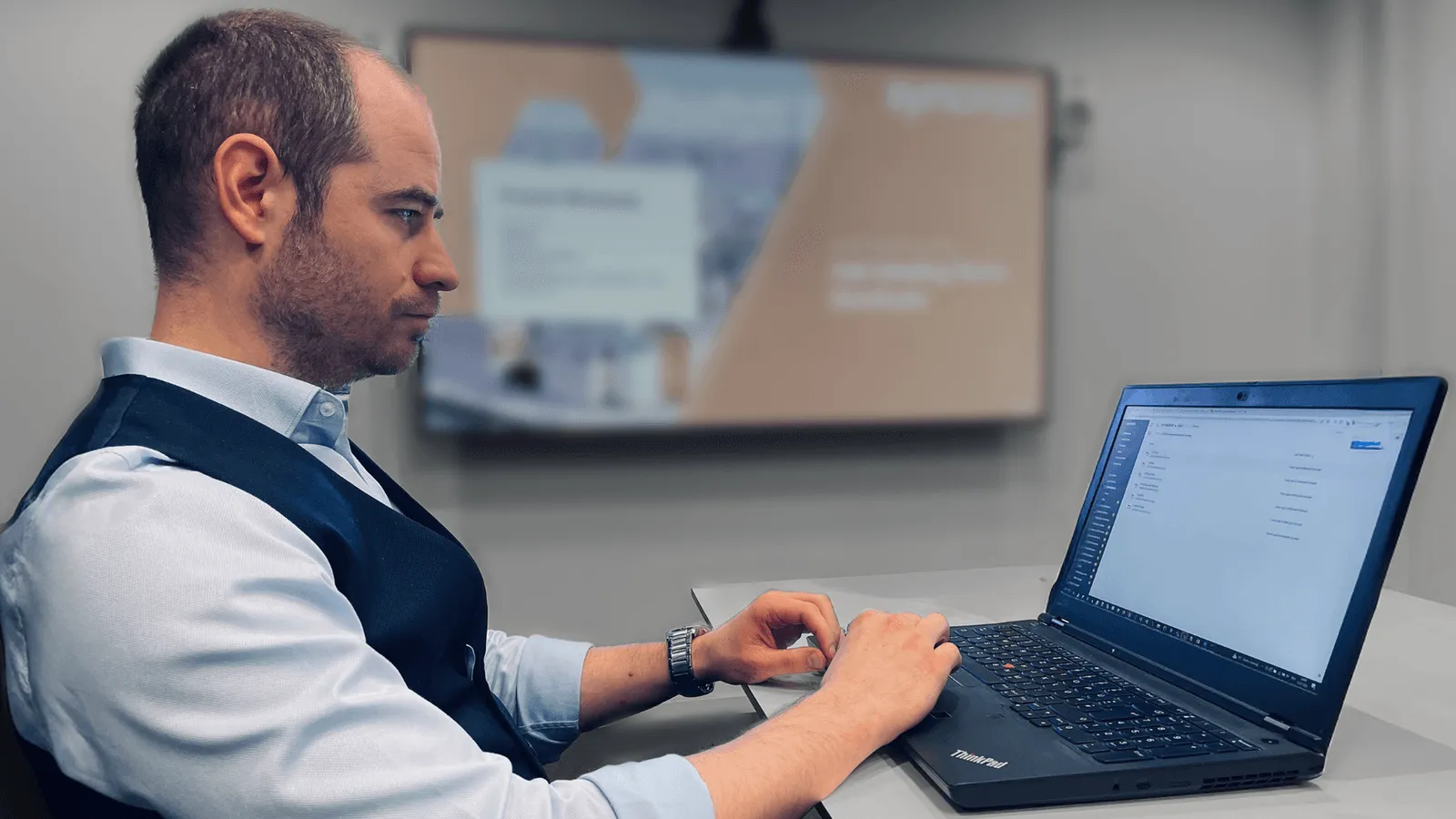
No ticket system where your request gets lost: you work with one person who knows your method and your business logic.
Fixed point of contact
One person with full ownership of interface, data and parameters. They know your history and don't have to read up first.
Hypercare
In the first weeks we watch the real operation, fine-tune and train your key users on your concrete cases.
Quarterly business reviews
We check service level, stock value and degree of automation against your goals and adjust policies and parameters together.
Further development
New sites, new assortments, new requirements: the system grows with you, without turning into a new project.
“Friendly, fully committed, and they resolve every challenge promptly.”

Common questions about operation.
What does Managed Operations concretely include?
The operation of the entire path: interface hosting on our infrastructure at Hetzner, monitoring and alerting, error resolution, maintenance of the stock parameters, metric reports and quarterly business reviews. Plus a fixed point of contact who knows your setup.
How quickly do you notice when something goes wrong at night?
The alerting reports missing runs and conspicuous data volumes to us, not to you. As a rule we're working on the incident before your team starts planning in the morning.
Do we need internal IT resources for this?
No. Your team works as usual in the ERP; we operate the path behind it. We only need your IT when something changes on your side, e.g. an ERP update or a new site.
What does ongoing operation cost?
Licence costs typically start at around €1,000 per month. The operations share depends on the scope: number of systems, sites and paths. We define that transparently before the project starts, with no hidden items.
How long does such an engagement usually run?
As a rule we work with our clients over several years: 3–6 months rollout, then ongoing operation with quarterly business reviews. Not because you'd be locked in, but because a continuously fine-tuned system delivers more value than one set up once.
You have a system nobody really operates anymore?
Then we look at it together: what runs, what's gathering dust, what's missing. Honest assessment included.
Request a strategy call →