Cut inventory, raise supply capability. Right inside Alphaplan.
Alphaplan is at home in wholesale, and so are we. EazyStock computes forecasts and order proposals on your Alphaplan data every night, with service-level targets per article class instead of fixed reorder points. Approved proposals land in your purchasing in the morning. Without an ERP switch, without a major IT project.
Can Alphaplan optimise inventory automatically?
Partly. Alphaplan creates purchasing proposals from history, trend and seasonal factors. What's missing: service-level targets per article class, statistical safety stocks and exception prioritisation. That's exactly what an inventory optimisation like EazyStock adds.
How does EazyStock get the Alphaplan data?
Via read-only views on the Alphaplan database, exchanged over encrypted SFTP. We supply the templates; your IT needs about half a day once for it. Go-live in 4–6 weeks.
Does EazyStock replace Alphaplan's planning?
No, it adds to it: forecasts, up-to-date parameters, prioritised proposals. Ordering stays in Alphaplan, with your tiered prices and minimum order quantities.
Alphaplan purchasing is good. And yet.
For trade, Alphaplan brings more purchasing functions than most systems in its class. Four points where it still gets tight as the assortment grows:
Minimum and target stocks stay manual work.
Alphaplan cleanly displays minimum, target, safety and available stock, and from version 6 reorders automatically when the reorder point is breached. But how high those values should be is still something you decide per article. With tens of thousands of items in technical wholesale, that means: the values date from back when someone last touched them.
Purchasing functions on alphaplan.de ↗Factors aren't an article forecast.
The purchasing proposals compute with past sales quantities plus trend and seasonal factors. That's more than many ERPs can do. What's missing: demand-pattern detection per article, outlier cleansing and a safety stock derived statistically from demand variability. A factor smooths the past; a forecast computes the future.
Purchasing proposals on alphaplan.de ↗Coverage doesn't tell you what's about to run short.
The coverage calculation divides stock by average consumption, i.e. linearly. For seasonal articles that's deceptive: before the season, coverage looks comfortable and isn't; afterwards it's the other way round. Anyone steering by it holds winter goods in summer and reorders too late in autumn.
Coverage calculation on alphaplan.de ↗You plan promotional goods separately.
Promotions, project business, a new large customer: the extra demand is in no proposal because it's in no history. You plan it next to the system, in Excel or in your head, and the order proposals keep running unperturbed at normal levels until the first items are missing.
New purchasing functions in Alphaplan 6 ↗Where does that lead for you?
Large assortment, parameters maintained yesterday: we know the pattern from many intro calls in wholesale:
Can it be done better? Of course: with EazyStock.
EazyStock computes on your Alphaplan data and answers exactly the four problems above. Your team keeps ordering in Alphaplan.
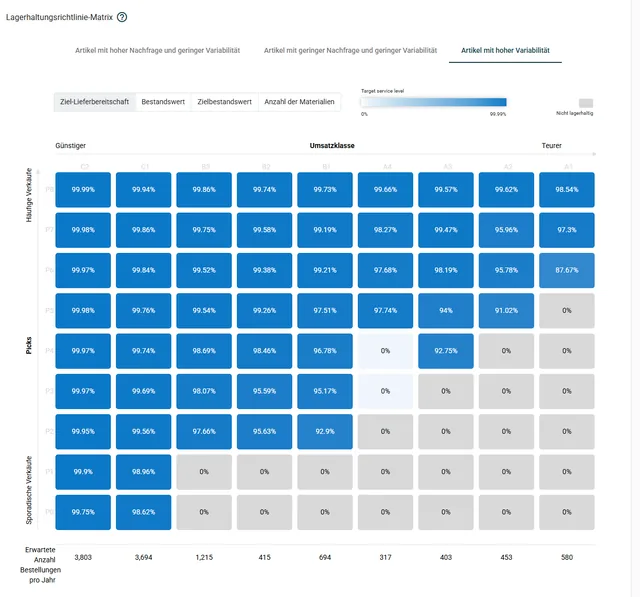
Up-to-date stock parameters.
Safety and reorder stock per article are recalculated every night, derived from your target supply capability per article class. Parameter maintenance is gone.
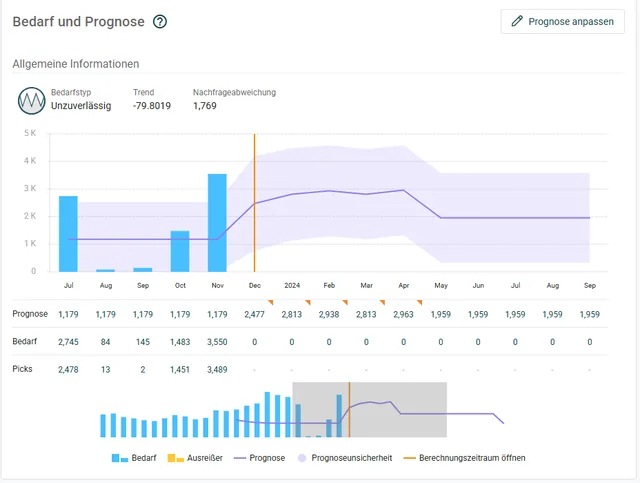
Real forecasts per article.
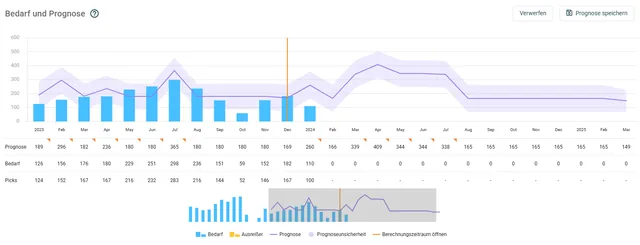
Demand-pattern detection, outlier cleansing, statistical safety stocks: EazyStock computes the future per article, not a single factor across the board.
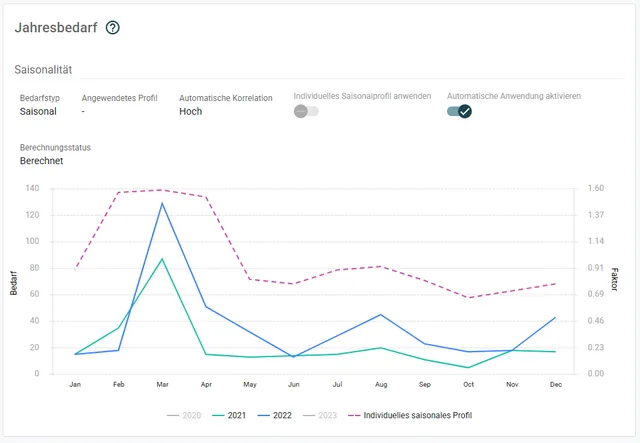
Seasonal articles detected automatically.
Seasonal curves are detected per article and flow into the proposals. Ordering happens before the season, drawdown before it, not after.
Promotional demand planned in.
Promotion or project business planned? You enter the expected extra demand as a forecast adjustment. The order proposals move with it before items are missing.
Views on top, proposals back.
The Alphaplan connector works with database views and file interfaces, exchanged over encrypted SFTP. Proven in technical wholesale with large assortments and tiered prices.
Set up views and SFTP
Your IT sets up the provided views on the Alphaplan database and an SFTP exchange folder. We supply the templates.
Your effort: approx. half a day of IT time, one-offMapping and test runs
We configure field mapping and business logic and run test runs against your real data until the proposals fit your assortment.
Your effort: a few clarifying questions, no developer neededNightly operation
Every night, articles, demand and orders flow to EazyStock. Approved proposals come back as an import file into your purchasing in the morning.
Your effort: none in regular operationTiered prices, minimum order quantities and supplier discount logic from Alphaplan flow into the order proposals: what's proposed is what's economically orderable. A manifest prevents duplicate transactions, we monitor the runs, and alerts go to us.
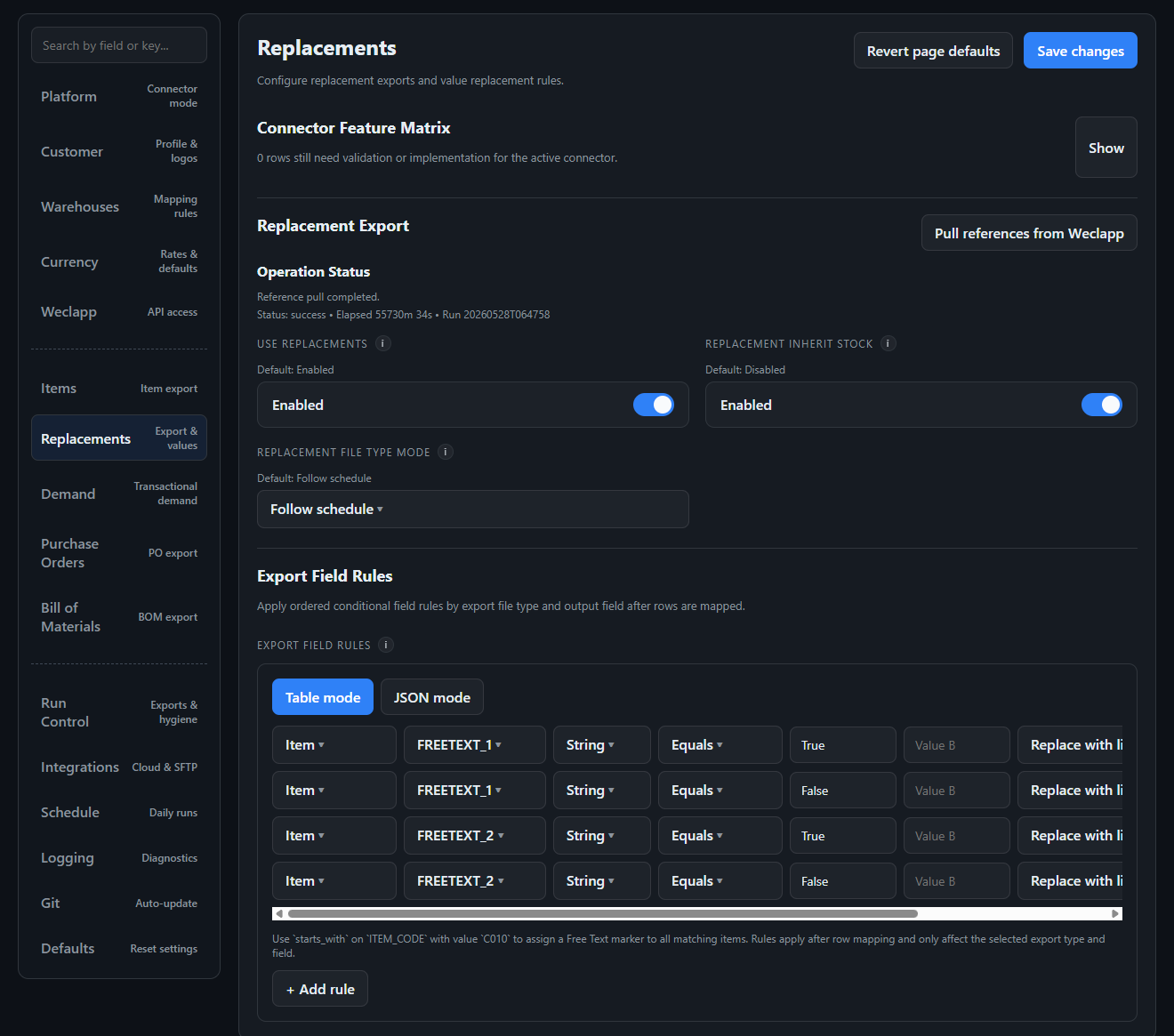
Behind it stands EazyERP, our middleware.
Field mapping to the EazyStock spec, value substitutions, warehouse mapping with roles, a quality gate against the run: what the connector does every night is configured instead of hard-coded, and traceable for every run.
“For our complex after-sales requirements we were looking for a solution to optimise working capital and spare-parts availability. Systempilot didn't just help us plan better, they integrated our business logic end-to-end.”

Common questions about Alphaplan and EazyStock.
How long does connecting Alphaplan to EazyStock take?
Views and the SFTP folder are set up with the supplied templates in about half a day. Then come data import, configuration of your business logic and test runs: expect 4–6 weeks to go-live, depending on data quality and assortment.
What do we need to do on our side?
Your IT sets up the database views we provide and an SFTP exchange folder; that's about half a day once. No installation in Alphaplan, no developer. We take care of the rest.
Does the system write into our Alphaplan?
No, never directly into the database. Reading is via views, and approved order proposals are written back as an import file through the Alphaplan file interface. A manifest prevents duplicates, even on repeat runs.
Do the proposals account for our tiered prices and minimum order quantities?
Yes. Tiered prices, minimum order quantities and supplier discount logic from Alphaplan flow into the order proposals. What's proposed is what's economically orderable, not the theoretically exact quantity.
Does EazyStock replace Alphaplan's planning?
No, it adds to it. Forecasts, stock parameters and order proposals come from EazyStock; ordering stays in Alphaplan. Your team keeps its familiar interface and processes.
What does it cost?
The Alphaplan connector is part of the EazyStock project, not a separate interface development. Rollout projects start at around €5,000, and licence costs typically start at around €1,000 per month.
Get more out of your purchasing in Alphaplan.
In the intro call we look at your assortment together and tell you honestly whether it pays off for you.
Arrange an intro call →